
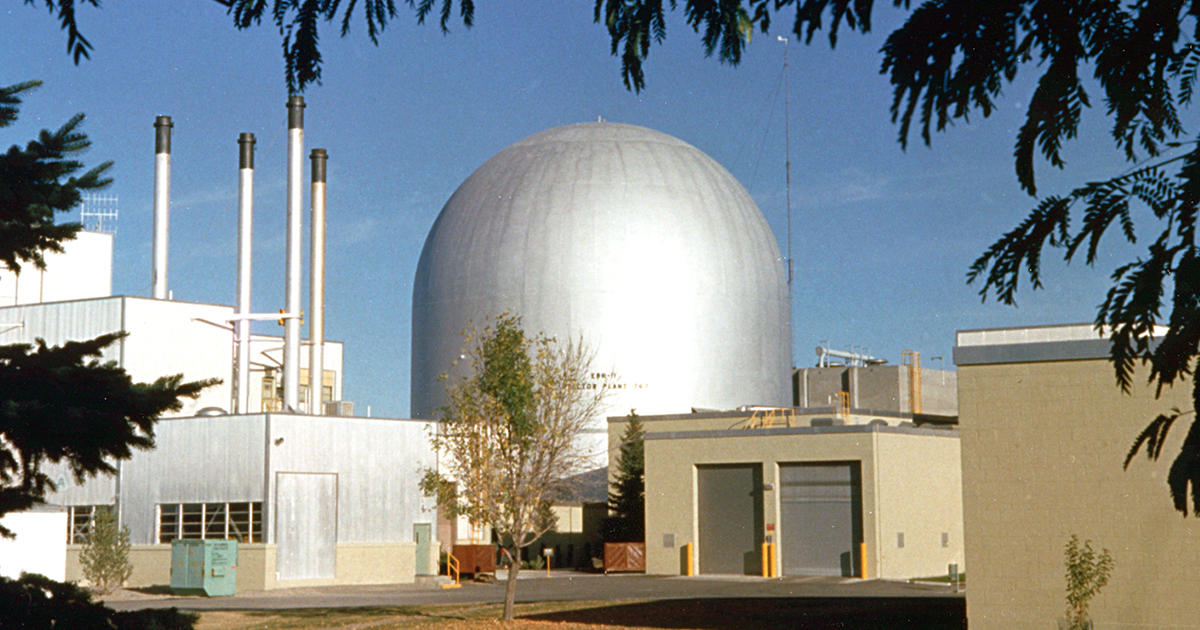
Over the past several weeks, more information has come to light about the U.S. Department of Energy (DOE) initiative to establish three Nuclear Lifecycle Innovation Campuses (NLICs) in the U.S. and what the competing states of Idaho, Louisiana, Oklahoma, Tennessee and Utah have offered to host them.
Idaho’s Memorandum of Understanding (MOU) with DOE signed by Governor Little on July 24, 2026, clearly states that Idaho would accept “out-of-state used nuclear fuel, spent nuclear fuel, and high-level radioactive waste” and would “address any issues related to the 1995 Idaho Settlement Agreement…”.
Of great interest is Section 5 of the MOU that itemizes 13 “Idaho’s Responsibilities”. Here are a few:
Under 5.1., Idaho agrees to subject “lands within Idaho on which the NLIC is sited to DOE’s jurisdiction and sufficient control, subject to mutual agreement and applicable state law.”
Question #1: Governor Little has promised that high-level waste would not be placed over the
Eastern Snake Plain Aquifer (ESPA). If waste cannot be disposed of at INL, where in Idaho
would it go? Is there state land suitable for high- and/or low-level waste disposal that is not over the ESPA or some other groundwater source? Or would Governor Little and the Idaho Legislature abandon the 1995 Settlement Agreement to allow for the “temporary storage” of any high- and low-level waste associated with the NLIC?
Under 5.2., Idaho would “process all necessary permits and approvals to support the establishment and operation of the NLIC, including utilities such as electricity and water, as allowed by state and federal law.”
Question #2: Would all NLIC activities, regardless of location, be exempted from the current
moratorium on new groundwater permits drawing from the ESPA? This is especially relevant given that data centers are among the possible NLIC facilities.
Under 5.3. Idaho would “ensure that state and local regulatory agencies exercise their regulatory authority in a manner that facilitates the establishment and operation of the NLIC…”
Under 5.12. Idaho would advocate on behalf of DOE with state and local authorities, to obtain, on an expedited and prioritized basis, any certificate, right of way, permit, lease or other authorization or benefit relation to the NLIC…”
Question #3: To what extent should cities, counties, and irrigation districts be concerned with
this state-level commitment to influence their authority and local decision-making processes?
Under 5.13. Idaho would “seek all necessary appropriations and authorizations from Idaho’s legislature to support the NLIC.”
Question #4: How much money would the Legislature have to commit to DOE to fulfill this
Promise? In a letter to Governor Little and Lt. Governor Bedke, signed on August 17, 2026, 44 Republicans and two Democratic legislators stated, “We will prioritize legislation needed to strengthen Idaho’s position, including funding mechanisms, permitting authority, and workforce investments that keep pace with the timeline DOE has set.”
Most agree that INL is well-suited to handle fuel reprocessing and the research aspects of the NLIC. However, many questions remain about Idaho’s geologic suitability for disposition of both low- and high-level radioactive wastes.
Jan Brown is a retired nonprofit executive who, from 1985-86, served as the natural resource and nuclear waste policy advisor to Democratic Governor John V. Evans. She worked at INEL as a program specialist in the National Low-Level Waste Management Program from 1979 to 1982.