
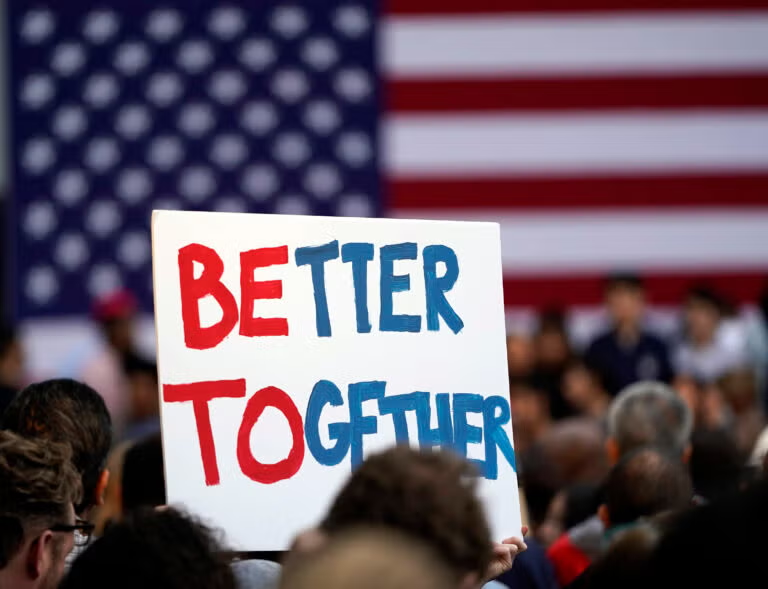
The constant pressure of politics has pushed many to the edge. It feels like we are caught in a whirlwind: waiting for the next headline, the next controversy, the next divide. The temperature continues to rise in a culture increasingly defined by conflict, where “haves vs. have-nots” and “us vs. them” dominate the conversation.
And when everything becomes a fight, something important gets lost.
Focus shifts inward. We pick sides. We defend teams. We argue over identity and ideology. But in doing so, we lose sight of what actually builds strong communities: shared priorities, practical solutions, and a commitment to moving forward together.
This past legislative cycle in Idaho reflects that shift. For many, it has felt unproductive—not because there weren’t real issues to address, but because those issues struggled to take center stage. Challenges tied to the state budget, education outcomes, and long-term water sustainability—issues that directly affect Idaho’s future—competed for attention and, too often, took a back seat.
Instead, the spotlight turned to divisive topics: which bathrooms individuals can use, debates over flags, proposals affecting public lands, and an opportunity for Idaho to choose which firearm will symbolize the state. These issues are designed to keep people on separate sides. An imbalance in focus raises a larger concern: Are we prioritizing what moves Idaho forward?
Meanwhile, as legislators return home, many will frame the session as a success. That’s part of the political cycle. But Idahoans have an opportunity—and a responsibility—to look beyond the messaging and evaluate outcomes for themselves.
This is where the conversation must change. Idaho has long prided itself on a practical, community-first mindset. There is an “Idaho way”—a tradition of valuing independence while also recognizing that strong communities require shared effort. We took care of our veterans, and families mattered. That tradition is not rooted in constant conflict. It is rooted in balance, accountability, and common sense.
As another election approaches, attention matters more than ever. Not just attention to personalities or party labels, but attention to priorities. What issues are being addressed? What problems are being solved? What outcomes are being delivered? Take note of the candidates who say little or are focused only on issues that favor a group of people rather than all Idaho citizens.
When the public focus remains divided, it creates space for decisions to be made without scrutiny. The more energy spent fighting each other, the less clarity there is on what is happening behind the scenes.
That doesn’t have to be the path forward. Idahoans can shift the conversation by asking better questions, demanding clearer results, and expecting leadership that reflects both conviction and balance. Conservatism, progress, and differing viewpoints can coexist within a system that works if the focus remains on outcomes that benefit the broader community.
Prosperity is not built through division. It is built through alignment around what works, what matters, and what moves people forward.
The question is not which side wins. The question is whether Idaho chooses to move forward together.
Dan Barker, Master of Human Resource Management, is a leadership consultant and the chair of the Bonneville County Democratic Central Committee.