
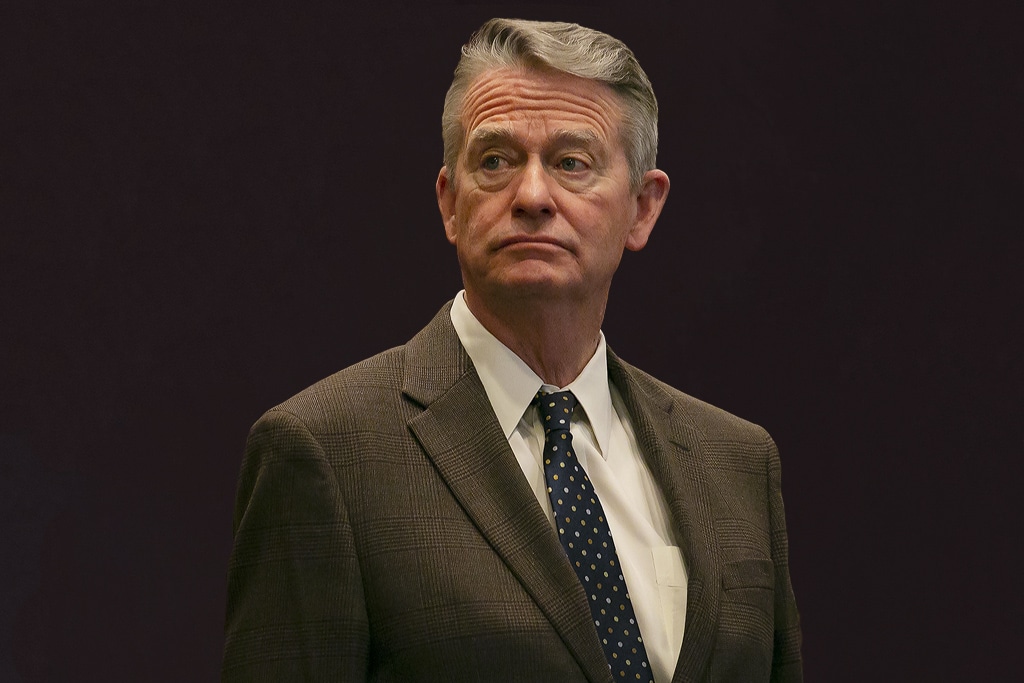
There is something rotten with a Governor who cannot act as a true steward of their state. Governor Brad Little has become increasingly similar to the Abbotts and others—leaders unwilling to stand for prosperity and liberty, instead cowering to the pull of the most extreme factions within their own party. Idaho is already feeling the consequences of the past two years of legislation. What lies ahead is far worse.
In 2026, Idaho’s legislative direction has made one thing clear: ideology is winning over economics, and politics is being prioritized over people.
Take the state’s recent budget decisions. Governor Little signed into law across-the-board cuts of up to 4% for most state agencies, with deeper cuts planned for the following year. These reductions are not abstract. They translate directly into fewer services, delayed infrastructure, and costs pushed down to local communities and taxpayers. For business owners, this means diminished support systems, strained workforce pipelines, and increased reliance on already stretched local resources. For farmers, it means less investment in water systems, rural development, and agricultural extension programs that are essential to long-term sustainability.
At the same time, the legislature has continued to focus on divisive social policies that inject uncertainty into the business climate. In 2026 alone, Idaho passed laws that require schools and professionals to report transgender minors to parents within days, criminalize certain uses of public and even private business facilities, and expand regulatory reach into private business.
Whether one agrees with these policies or not, their downstream effect is undeniable: they create risk for employers. Businesses now face increased legal exposure, HR complexity, and challenges in recruiting talent, especially from out of state. In a labor market where workforce attraction is already difficult, Idaho is choosing policies that make it harder.
And while agriculture remains “deeply woven into Idaho’s way of life,” as leaders often state, the policy environment tells a different story. Instead of prioritizing water certainty, land use clarity, and market access, the 2026 session has been dominated by budget tightening for the middle class and political signaling.
Worse still, structural proposals like limiting citizen-led initiatives—placing more control solely in the hands of the legislature—signal a move away from individual liberty and local voice. That should concern every business owner and every rancher who believes in the ability to shape their own future.
True stewardship means creating an environment where businesses can grow, where farmers can plan generations, and where communities are strengthened, not divided. It requires balance, foresight, and the courage to stand up not just to the minority party, but to the loudest voices within your own.
Instead, Idaho is being pulled toward a model where governance is reactive, ideological, and increasingly disconnected from economic reality. The cost of that shift will not be paid in headlines. The cost will be paid in fewer small businesses started, fewer family farms sustained, and fewer workers choosing Idaho as a place to build a life. Idaho deserves leadership grounded in prosperity and liberty—not politics and fear.
Dan Barker, Master of Human Resource Management, is a local consultant and the chair of the Bonneville County Democratic Central Committee.